Most legal teams have some version of a playbook. A document somewhere — usually a Google Doc with a descriptive filename and a last-edited date that's more than a year old — that captures how the team approaches certain contract clauses. And most teams will tell you, honestly, that associates don't use it.
This isn't a problem with associates. It's a problem with what most teams call a playbook. A document that describes desired outcomes without providing clause-level guidance, or that lists preferences without explaining what to do when a counterparty pushes back, isn't a playbook. It's a policy summary. Policy summaries don't help during a live negotiation.
Here's what distinguishes a playbook that functions from one that doesn't.
The Playbook Has to Be Clause-Level, Not Category-Level
The most common failure mode in contract playbooks is structuring them around topics — "indemnification," "limitation of liability," "IP" — with a few paragraphs explaining the company's philosophy on each. That's useful background. It doesn't help an associate who is looking at a specific clause variant that a vendor's outside counsel just introduced on page 14 of a redline.
A playbook that works is organized around specific clause language. For each key provision type, it should document: what the company's standard position is (ideally with sample language), what acceptable deviations look like (with examples), what's a hard stop that requires escalation, and what the escalation path is.
That level of specificity is harder to write initially — it requires senior attorneys to think through edge cases and commit positions to paper rather than leaving them as institutional knowledge. But it's the only format that's actually usable at the moment of review.
Positions Need Explanations, Not Just Answers
A playbook that says "we always accept mutual limitation of liability capped at 12 months of fees" tells an associate what the answer is. It doesn't tell them why, which means they can't calibrate when the situation is non-standard or when a counterparty's argument might actually have merit.
The why matters in practice because contract negotiation involves judgment calls at the margins. If an associate knows that the 12-month cap exists because the company's exposure in a typical SaaS vendor engagement tops out at approximately that level, they can think more clearly about whether a vendor offering a 6-month cap for a deeply integrated, business-critical system is materially different. They can escalate with a specific framing rather than just flagging "counterparty deviated from playbook."
We're not saying every position needs a treatise-length explanation. Two to three sentences per clause on the reasoning is usually enough. But the reasoning has to be there.
Negotiate-Down Fallback Positions Are the Most Valuable Part
The second most common failure mode in playbook construction is specifying the ideal position without specifying the acceptable fallback. In practice, your ideal position is often the opening bid, not the closing position. If the playbook says "we require a 30-day cure period before termination for cause" but doesn't specify what's acceptable if the counterparty insists on 15 days, the associate reviewing that redline has two options: escalate everything (creating bottleneck) or make a call with no guidance (creating inconsistency).
The fallback position — what's the minimum acceptable outcome before this issue requires partner or GC review — is what actually determines how fast and consistently commodity contracts get closed. Document it explicitly for every material clause in your standard agreements.
Organize by Contract Type, Not Just Clause Type
The same clause in different contract types has different risk profiles. A broad indemnification clause in a $5,000 software license agreement carries different exposure than the same clause in a $500,000 professional services agreement. A playbook that treats all indemnification clauses identically misses this.
Structure your playbook with a first tier organized by contract type (vendor NDA, inbound SaaS agreement, outbound professional services agreement, consulting agreement, employment agreement, etc.) and a second tier organized by clause type within each contract category. This makes it immediately useful: an associate reviewing a vendor NDA goes to the vendor NDA section and finds the specific clause guidance they need, rather than hunting through a general clause library that may or may not apply to their context.
The Update Cadence Has to Be Real
A playbook that doesn't get updated becomes a liability faster than no playbook at all. Outdated guidance is worse than no guidance, because it gives associates false confidence that they're operating within sanctioned parameters when they may not be. Regulatory changes, changes in the company's risk tolerance as it grows, new contract types that didn't exist when the playbook was originally written — all of these create divergence between what the playbook says and what's actually the right answer.
Designate a playbook owner (usually the GC or senior associate) with a quarterly review obligation. Each quarter, that person should review any negotiation outcomes that deviated from playbook positions — both cases where deviations were approved and cases where they were rejected — and update the guidance accordingly. This is about 30 minutes of work per quarter if the playbook is well-structured; it's a multi-day project if the playbook has been neglected for a year.
The review should also capture new clause variants that surfaced during the quarter. If three different SaaS vendors introduced a new-to-you type of limitation on the warranty period in the past 90 days, the playbook should reflect the team's settled position on that variant before the next round of reviews begins.
Format for the Moment of Use
Playbooks are usually written as narrative documents because they're drafted by attorneys who think in prose. They're used during contract review, which is a task that requires jumping to specific information quickly. These two facts are in tension.
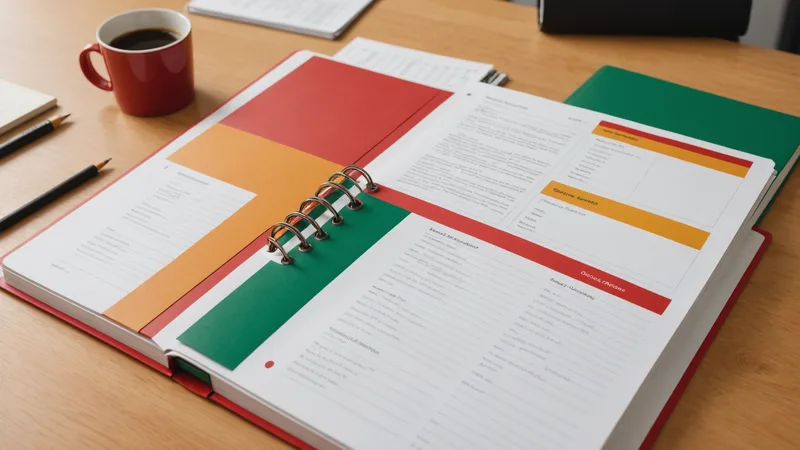
The practical solution is a table or matrix format for the core guidance (clause type, standard position, acceptable fallback, hard stops, escalation path) with prose commentary underneath for context and edge cases. This makes the document scannable during review without sacrificing the nuance that makes guidance actually reliable.
When we designed the playbook integration in Winpathio, we found that the most effective playbooks we encountered in practice were structured this way — a quick-reference matrix that let a reviewer check a clause variant against the company's position in under 60 seconds, with the explanatory content available on demand for edge cases. The structure is more important than the prose quality. A well-structured playbook with average writing will outperform a beautifully written document with poor navigability every time.
The associates who ignore playbooks aren't ignoring them because they don't care about consistency. They're ignoring them because the format makes the guidance unreachable under time pressure. Fix the format, and you'll find the playbook gets used.